From learning the piano in my forties to building my own music-reading app
Some years ago, I came to the rather uncomfortable conclusion that I was spending far too much of my free time doing very little of any value.
You come home, turn on the television or watch a video, one video becomes another, and suddenly the evening has disappeared.
I decided I ought to do something about it.
I needed something that would exercise my brain, demand concentration, offer visible progress and, most importantly, remain enjoyable. I also like things with a clear objective and some way of measuring whether I am actually getting better.
Eventually, I arrived at a wonderfully simple idea:
I would learn to play the piano.
From an engineer’s point of view, it did not appear terribly complicated. There are notes on a page. Each note corresponds to a key on the keyboard. Press the correct key at the correct moment.
How difficult could it possibly be?
As it turns out, rather difficult.
The first piano
I started sometime in my forties knowing virtually nothing about music theory. Whatever I had once learnt during music lessons at school had long since disappeared.
First came a small digital piano. Later, a proper one: a Roland FP-40. Then came a large iMac, because if one is going to read sheet music from a screen, a larger screen is simply better.
And then there was a period when I became completely absorbed by the piano.
I would sometimes practise for an hour before leaving for work and for at least another hour in the evening. I kept that up for perhaps a year.
I used software that showed me what to play, where to put my fingers and whether I had pressed the correct key. I progressed through pieces, improved, and genuinely felt that I was learning to play.
Eventually, however, came an uncomfortable realisation.
I could not really play. I could repeat what the software had taught me.
Give me a piece I already knew and I knew where my fingers belonged. Quite often, I had memorised entire sequences of movements.
Put unfamiliar sheet music in front of me, however, and everything slowed down dramatically.
My real problem was not pressing the correct key.
My problem was reading the notes quickly enough.
Playing a piece and reading music are not the same thing
That distinction became rather important to me.
Software could teach me a particular piece. But between a symbol on the stave and a key on the piano there was still a slow mental process.
Which note is that?
Where is it on the keyboard?
What key are we in?
Is that a sharp or a flat?
Instead of reading, I was often guessing or recalling a position I had already learnt.
Eventually, my enthusiasm faded. I started playing more golf, making more videos (quite successfully Gentlemans_sport), and the piano gradually moved into the background. So did Xcode, which I had experimented with years earlier.
And that was more or less where things remained for several years.
Then came a new MacBook
When I bought a MacBook Air, I remembered Xcode.
Suddenly I could have my development environment with me wherever I went, and a very simple idea occurred to me.
There was an app I occasionally used to practise reading notes. The principle was straightforward: it displayed a note and I had to identify it.
Unfortunately, it was full of advertisements. Using it for a few minutes meant constantly closing things, waiting and being interrupted.
So I thought:
Why not build something this simple myself?
A few cards. A note. An answer. The next note.
Nothing more.
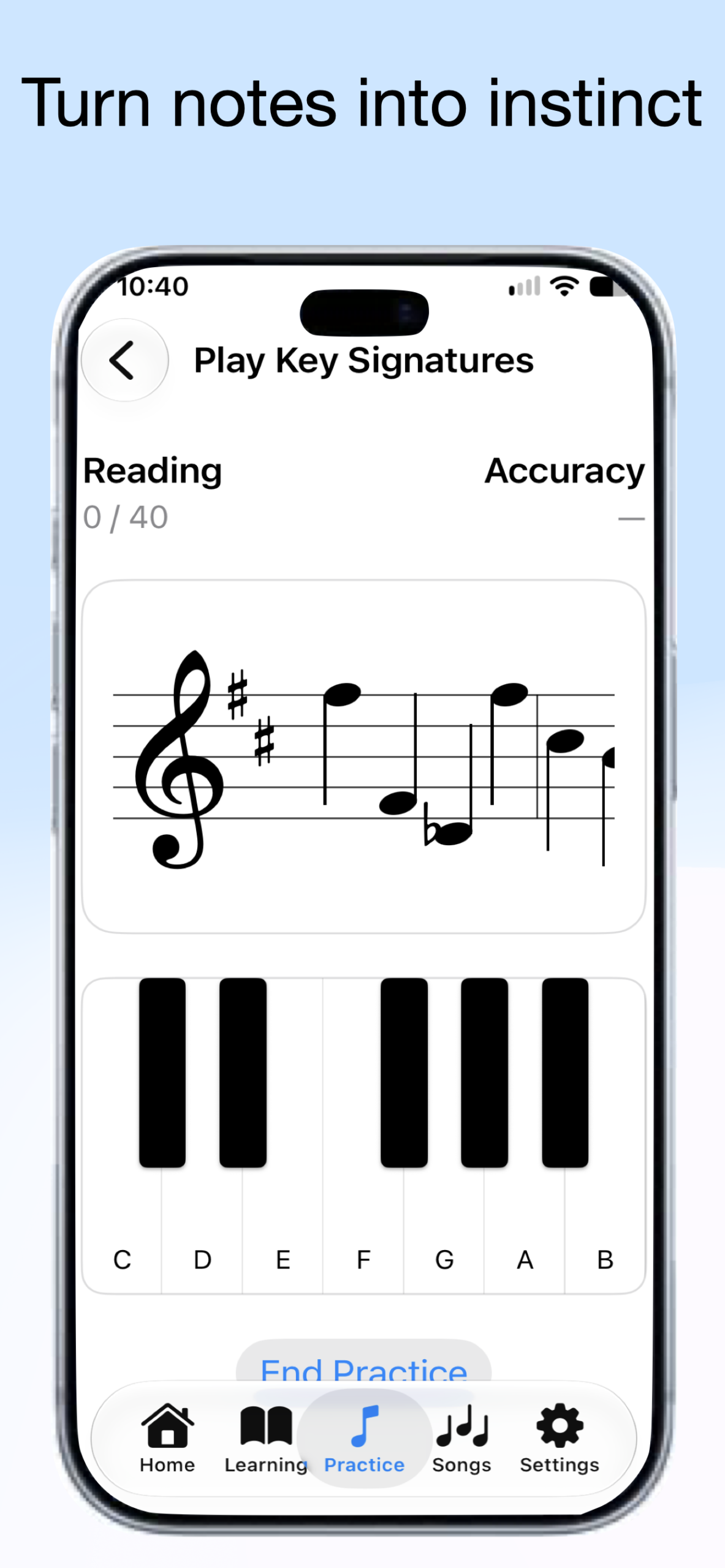
That was the beginning of Sight.
Just one small app…
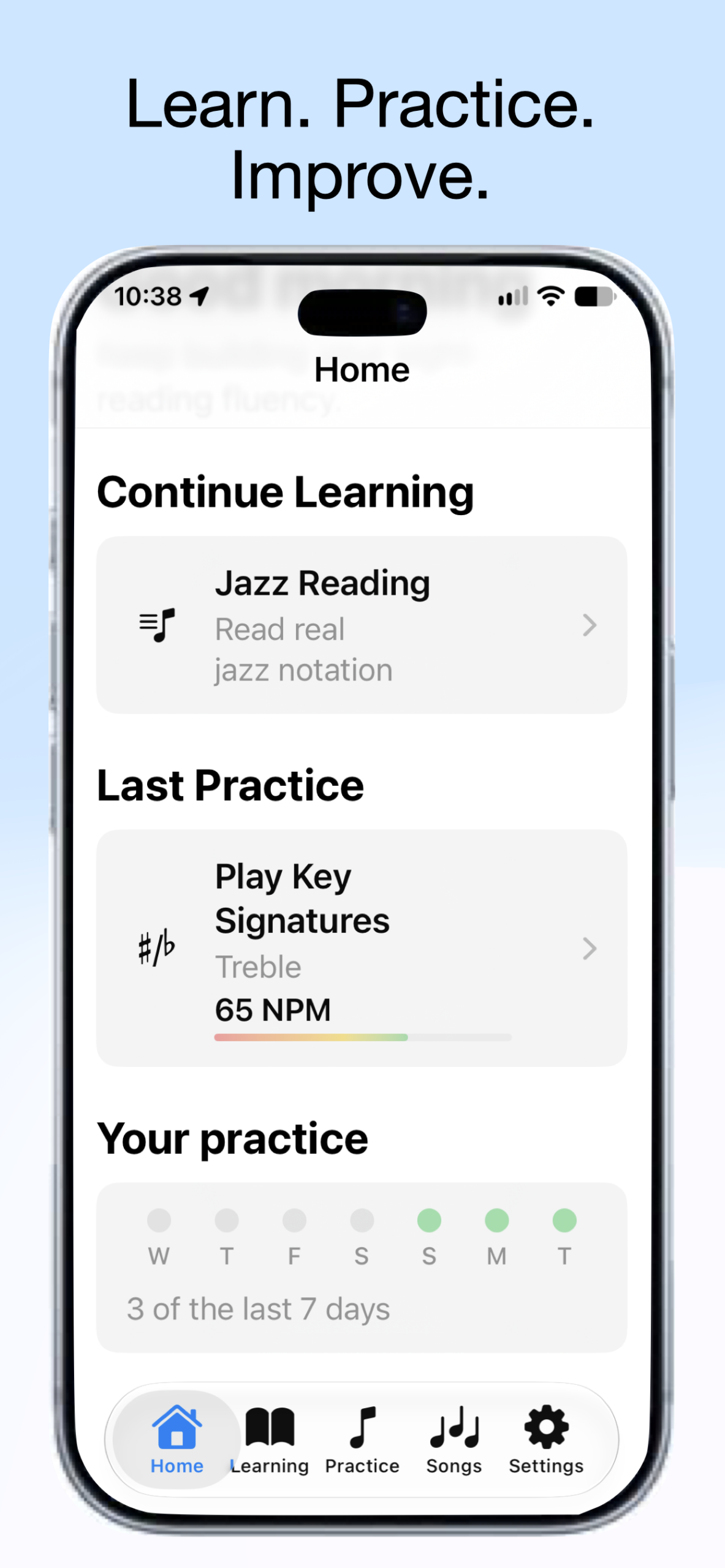
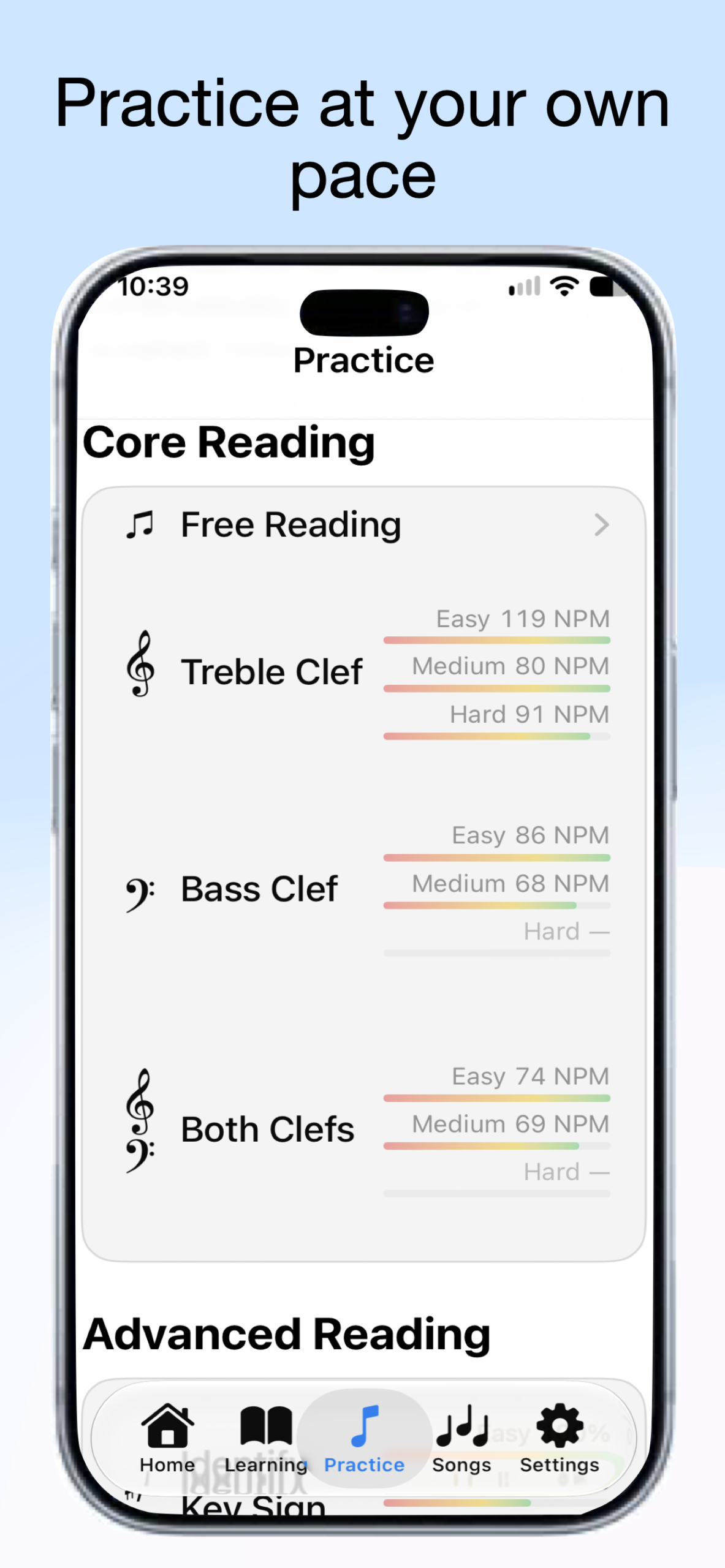
The original idea was simply Practice: a way of practising music reading.
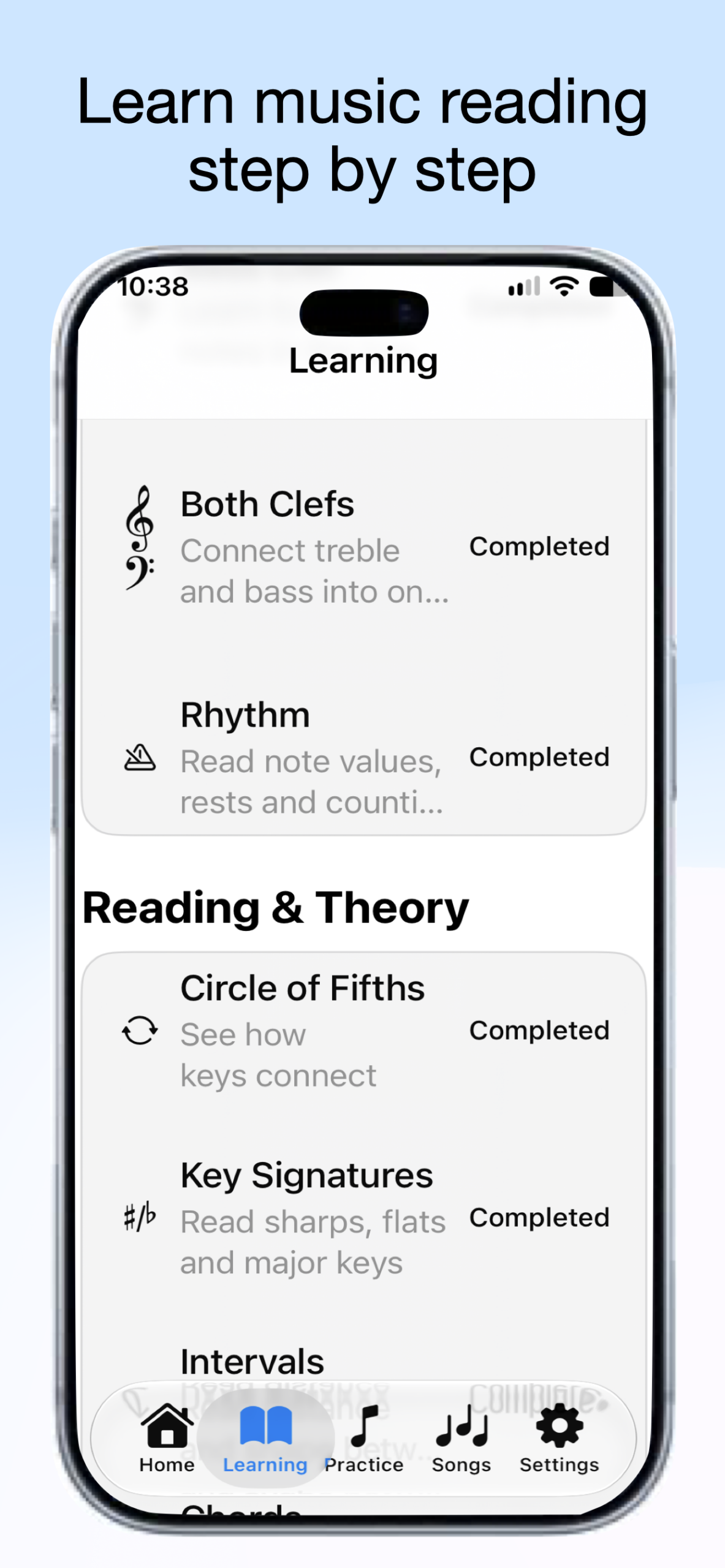
But if I had Practice, it seemed sensible to explain why the notes were where they were.
So Learning appeared.
And once there was Learning, surely there ought to be more kinds of Practice, so that what had been learnt could actually become a skill.
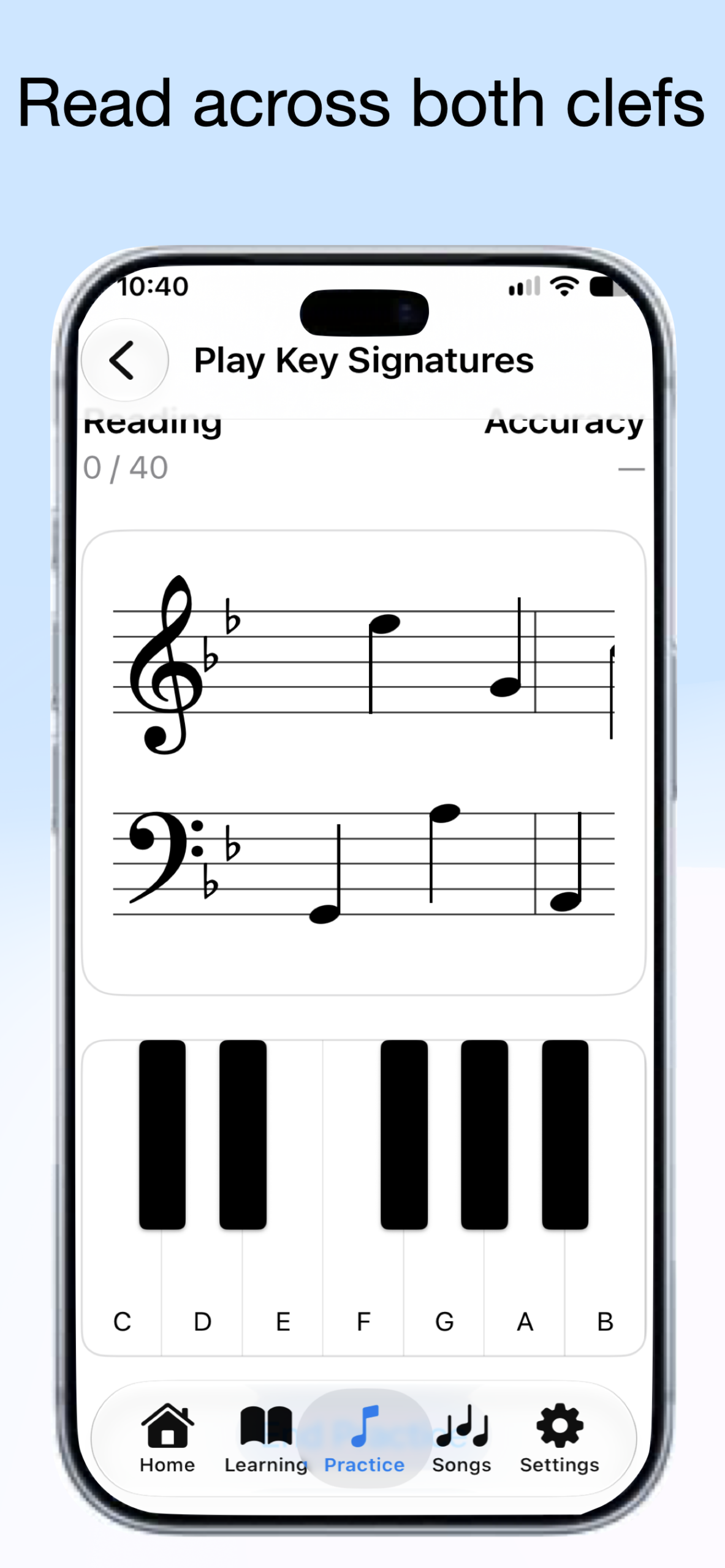
Treble and bass clefs followed. Then both clefs together, accidentals, key signatures, chords and other parts of musical notation.
At some point I realised I was no longer building a tiny application for myself.
I was building something that might be useful to other people as well.
And if other people might find it useful, why not put it on the App Store?
And if it was going onto the App Store, I did not want it to feel like a weekend experiment.
Let’s do it properly.
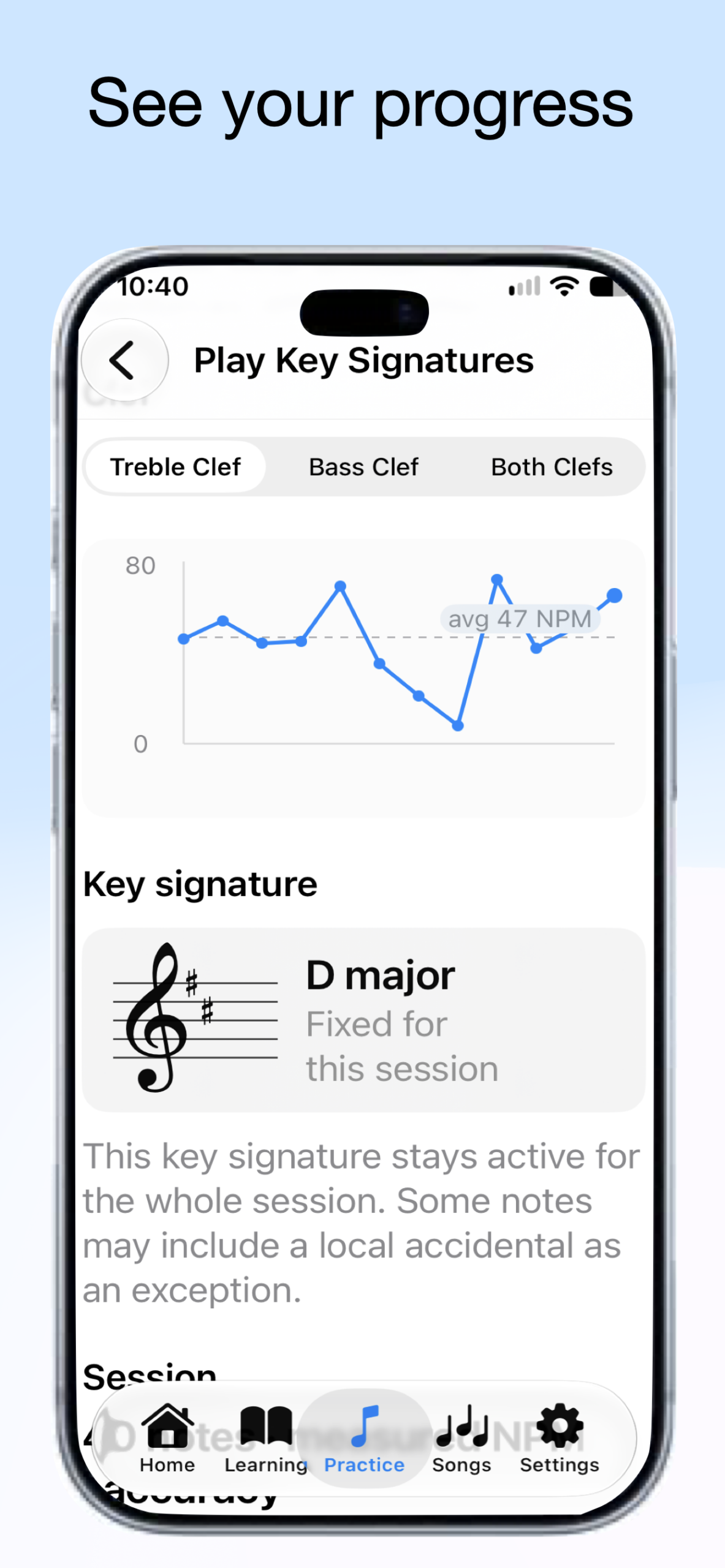
A handful of simple cards gradually became Sight for iPhone, iPad and Mac.
Sight
The idea behind Sight is still exactly the same as it was at the beginning.
Learn to actually read music.
Not memorise that, at a particular point in a piece, the second finger goes here and the fourth finger goes there.
See a note and know what it means.
Without a lengthy calculation. Without guessing.
When we read ordinary text, we do not consciously decode every individual letter. Eventually, a musical note should not feel like a puzzle that must first be solved either.
Sight therefore combines two things.
Learning explains the principles.
Practice turns those principles into automatic recognition.
And, over time, I want to take it considerably further.
I am Sight’s first user
Perhaps my favourite part of all this is that Sight was not created from an abstract idea of somebody else’s problem.
It is my problem.
And I use Sight myself.
When I started building it, I was still guessing notes surprisingly often.
Today, I read them.
Slowly, for now. Accidentals can still make me stop and think. Key signatures still give me trouble. I am certainly not about to become a concert pianist.
But it is no longer guessing.
It is reading.
Sight reading.
And that is precisely the point.
I do not expect to wake up one morning and suddenly be able to play the piano perfectly. But I can practise a little every day and see that something which took me several seconds a few months ago can now be recognised almost immediately.
When MIDI input eventually arrives in Sight, I shall connect my Roland again.
This time, however, I do not want software telling me: first finger here, second finger there.
I want to look at the music.
Read it.
And play it.
Link to AppStore: Sight by Gentleman’s Studio
What comes next
Sight 1.0 is certainly not the end. It is the beginning.
I already have a long list of things I want to add: better and more intelligent Practice, MIDI, real musical exercises, meaningful progress measurement, a way of discovering your actual reading level, more languages, and countless small improvements that emerge simply from using the app every day.
There are, however, a few principles I want to preserve.
Sight should not become a game that keeps you engaged with points, coins and virtual prizes.
It should not punish you because you missed a day.
And it should not collect your learning data simply so that I can watch what you do with the app.
Your learning belongs to you.
Sight should be a calm, thoughtfully designed tool that does one thing exceptionally well:
help you learn to read music.
From the very beginning to the point where individual notes no longer require conscious thought.
I am not there yet.
But for the first time, I feel that I know exactly where I am going.
And building Sight is proving almost as enjoyable as those first hours I spent at the piano all those years ago.
Hopefully, this time without the several-year break.